





Load Compatibility and Efficiency with Modified Sine Wave Inverters
- Understanding Modified Sine Wave Inverters
- What a modified sine wave is and how it is generated
- Key electrical characteristics that affect loads
- and procurement considerations
- Load Compatibility: Practical Guidance by Device Type
- Resistive loads (heaters, incandescent lamps)
- Motors, compressors, and inductive loads
- Electronics with switch-mode power supplies (SMPS), computers, and chargers
- Measured Efficiency and Performance Trade-offs
- Typical inverter efficiency ranges
- How waveform shape affects apparent efficiency
- Bench testing and verification methods
- Mitigation, Sizing, and Integration Best Practices
- Sizing and derating rules
- Filtering and power conditioning options
- When to choose pure sine instead
- Compatibility Table: Common Devices vs Modified Sine Wave
- Practical Case Studies and Decision Checklist
- Case example: Off-grid cabin with mixed loads
- Case example: Service van for technicians
- Checklist before purchasing
- FAQ
- 1. Will my laptop charger work with a modified sine wave inverter?
- 2. Can a modified sine wave inverter damage motors?
- 3. How much less efficient is a modified sine inverter compared to a pure sine inverter?
- 4. Are there simple fixes if a device hums or malfunctions on modified sine?
- 5. Should businesses ever choose modified sine for mission-critical applications?
- 6. How do I test an inverter on-site to confirm compatibility?
- References
Modified sine wave power inverter technology is a cost-effective option for converting DC battery power to AC, but its stepped waveform behaves differently than a pure sine wave. This article provides an AI-GEO-friendly, practical overview of compatibility with common load types, measurable efficiency impacts, testing and mitigation strategies, and procurement guidance for businesses and technical users. The goal: enable correct inverter selection, avoid equipment damage, and optimize system performance.
Understanding Modified Sine Wave Inverters
What a modified sine wave is and how it is generated
A modified sine wave is a quasi-square waveform made of stepped segments approximating a sine curve. In practice, electronic switching (PWM or timed H‑bridge logic) produces discrete voltage levels rather than a smooth sinusoid. Compared with pure sine inverters, this simpler topology reduces cost and complexity but increases harmonic distortion (total harmonic distortion, THD) and changes crest factor behavior.
Key electrical characteristics that affect loads
Important measurable characteristics include RMS voltage accuracy, harmonic content (THD), crest factor, and switching frequency. High harmonic content can raise heating in motors and transformers, cause noise or humming, distort power supplies, or increase current draw on nonlinear loads. When specifying or testing an inverter, measure RMS voltage, THD (if available), and observe waveform with an oscilloscope where possible.
and procurement considerations
For procurement teams evaluating modified sine wave power inverter models, prioritize vendors that publish waveform graphs, efficiency curves, and recommended load lists. Commercial keyword: buy modified sine wave inverter — look for warranty, overload protection, and documented real-world test data to reduce integration risk.
Load Compatibility: Practical Guidance by Device Type
Resistive loads (heaters, incandescent lamps)
Resistive loads generally tolerate modified sine wave inverters well. They draw current proportional to RMS voltage and are insensitive to waveform shape. Expect nearly identical performance and no long-term damage for typical resistive devices; this makes modified sine ideal for heating and incandescent lighting applications where cost matters.
Motors, compressors, and inductive loads
Universal or DC motors may run acceptably, but AC induction motors and motor-driven compressors often experience higher heating, increased inrush current, reduced torque, and audible noise on modified sine wave power. For pumps, refrigerators, HVAC compressors and other inductive equipment, choose pure sine inverters or test on a bench under representative conditions. If modification is unavoidable, derate the load and measure temperature rise and starting success rate.
Electronics with switch-mode power supplies (SMPS), computers, and chargers
Many modern devices with switch-mode supplies (laptops, phone chargers, LED drivers) will operate on modified sine but may show reduced efficiency, increased heat, audible whining, or failure to meet manufacturer EMI/EMC requirements. Sensitive equipment, medical devices, and precision instrumentation should use pure sine inverters to ensure full compliance and safety.
Measured Efficiency and Performance Trade-offs
Typical inverter efficiency ranges
Efficiency depends on inverter design, load level, and topology. Representative on-line published ranges are:
| Inverter Type | Typical Full-load Efficiency | Notes |
|---|---|---|
| Modified sine wave | ~75%–90% | Lower cost designs often toward lower end; efficiency varies strongly with load and switching design. |
| Pure sine wave (modern DSP/CF) | ~85%–95% | Generally higher and more consistent across loads; better THD and power factor handling. |
These ranges are aggregated from manufacturer datasheets and industry overviews; when efficiency matters for battery runtime or thermal design, require measured efficiency curves from the vendor rather than relying on nominal specifications.
How waveform shape affects apparent efficiency
Two effects reduce useful efficiency with modified sine wave in certain loads: higher harmonic currents that increase losses in inductive components and switch-mode supplies that have non‑linear input behaviors and draw disproportionately more current during waveform transitions. In battery-operated systems, these losses translate to reduced run-time and higher thermal stress.
Bench testing and verification methods
To evaluate real efficiency and compatibility, perform these tests:
- Measure AC RMS voltage and THD with a power analyzer under representative load levels.
- Check starting/stalling behavior for motors and compressors, and monitor locked-rotor current.
- Measure inverter input (DC) and output (AC) power to calculate real-world efficiency across loads.
- Listen for audible noise and measure temperature rise in transformers and power supplies during extended operation.
Mitigation, Sizing, and Integration Best Practices
Sizing and derating rules
When deploying a modified sine inverter, apply conservative sizing: many installers recommend selecting an inverter with continuous capacity 20%–50% above expected continuous load to handle harmonic-related heating and start-up currents. For motor loads, specify an inverter with an adequate surge (peak) rating and test starts multiple times to verify reliability.
Filtering and power conditioning options
If cost constraints push toward modified sine solutions but some sensitive loads must be supported, consider:
- Output LC or EMI filters to reduce high-frequency switching noise.
- Line reactors or isolation transformers for motors and inductive loads to reduce heating and noise.
- Dedicated pure sine UPS or inverter for critical electronics, while using modified sine for bulk resistive loads.
When to choose pure sine instead
Select pure sine inverters for: medical equipment, precision laboratory instruments, audio/video production gear, variable-frequency drives (VFDs), refrigeration and HVAC compressors (unless explicitly tested), and where manufacturer warranty or EMI compliance is required. For businesses, the extra upfront cost often avoids warranty claims, downtime and equipment replacement costs.
Compatibility Table: Common Devices vs Modified Sine Wave
| Device Type | Compatibility | Notes / Recommended Action |
|---|---|---|
| Incandescent bulbs, resistive heaters | Compatible | Operate normally. Use modified sine for cost-effective heating/light loads. |
| LED & CFL lighting | Often compatible, variable | Some LED/CFL drivers hum, flicker or have reduced life. Test representative fixtures. |
| Switch-mode power supplies (chargers, laptops) | Usually functional but variable | May run hotter or cause audible noise. Avoid for sensitive/guaranteed operation unless tested. |
| Induction motors, compressors | Potentially incompatible / risky | Increased heating, reduced torque, start failures. Use pure sine or test with derating. |
| Audio equipment | Risky | Harmonics produce audible hum and noise; pure sine recommended for critical audio. |
| Medical & sensitive instrumentation | Not recommended | Use certified pure sine inverters that meet regulatory standards. |
| Microwave ovens | Mixed | Some models will run but with reduced performance or increased magnetron stress. Test or use pure sine. |
Practical Case Studies and Decision Checklist
Case example: Off-grid cabin with mixed loads
Scenario: Lighting (LEDs), small fridge with compressor, laptop, resistive heater. Recommendation: Use a hybrid approach — a modified sine inverter for resistive heating and non-sensitive lighting, plus a small pure sine inverter or dedicated UPS for the refrigerator compressor and electronics. Test the fridge start on-site to verify success; if starts fail, swap to pure sine for that circuit.
Case example: Service van for technicians
Scenario: Power tools (mostly universal motors), battery chargers, mobile laptop. Recommendation: Modified sine often acceptable for power tools and chargers; provide a small pure sine outlet for laptop and measurement instruments to prevent interference and charging inefficiencies.
Checklist before purchasing
- List all loads with starting and continuous power and note inductive/resistive classification.
- Request waveform graphs and efficiency curves from vendors; ask for THD numbers if available.
- Plan for 20%–50% continuous derating for mixed or inductive loads when using modified sine.
- Specify surge capacity for motors and test start behavior on-site or in lab.
- Consider hybrid deployment: use modified sine where acceptable, reserve pure sine for critical loads.
FAQ
1. Will my laptop charger work with a modified sine wave inverter?
Most modern laptop chargers (SMPS) will work on a modified sine wave, but some may run hotter, produce audible noise, or exhibit reduced efficiency. If the laptop or charger is critical, use a pure sine inverter or test the charger under load. For long-term reliability, pure sine is safer.
2. Can a modified sine wave inverter damage motors?
Potentially yes — especially with AC induction motors and compressors. Harmonics cause extra heating and can reduce torque. Short-term operation may be acceptable, but continuous use can shorten motor life; testing and derating are recommended.
3. How much less efficient is a modified sine inverter compared to a pure sine inverter?
Typical full-load efficiency ranges overlap, but modified designs may operate around 75%–90% while modern pure sine inverters typically achieve 85%–95%. Actual efficiency depends on load, quality of design, and operating point. Always check measured curves from manufacturers for precise planning.
4. Are there simple fixes if a device hums or malfunctions on modified sine?
Sometimes adding output filtering (LC filter), using a small isolation transformer, or moving the device to a pure sine source resolves noise and interference. For many LED/CFL lamps, swapping to a driver rated for modified sine may help. However, for motors and medical gear, switching to pure sine is often the only reliable fix.
5. Should businesses ever choose modified sine for mission-critical applications?
Generally no. For mission-critical, safety, or warranty-sensitive equipment, pure sine inverters are the prudent choice. Modified sine can be used for non-critical, cost-sensitive loads, but risk assessment and redundancy planning are necessary.
6. How do I test an inverter on-site to confirm compatibility?
Test with representative loads. Measure AC RMS and THD with a power analyzer if available, observe start-up success for motors, monitor temperature of transformers and supplies over several hours, and listen for audible anomalies. Document results and require vendor support if performance is outside expectations.
Need assistance selecting the right inverter or testing equipment? Contact our power systems team to request product recommendations, field testing, or a compatibility assessment. View our modified sine wave inverters and pure sine alternatives in the product catalog or request a quote for site evaluation.
References
- Inverter (electrical) — Wikipedia (accessed 2026-01-13)
- Sine wave — Wikipedia (accessed 2026-01-13)
- Modified Sine Wave vs Pure Sine Wave Inverters — Renogy (accessed 2026-01-13)
- Inverters — Battery University (accessed 2026-01-13)
- Inverters — Victron Energy (product and technical notes) (accessed 2026-01-13)
Contact us to discuss product selection, request datasheets or schedule a compatibility test: sales@example.com | +1-800-555-0100. View our inverter product range and request quotations on the product page.
Comparing Brands: Renogy vs Victron 2000W Pure Sine Inverters
Best 24V Off-Grid Inverters for Solar Homes and Cabins
Top 10 mppt charge controller Manufacturers and Supplier Brands
Case Studies: High Frequency Inverter Success in Solar Microgrids
Modified Sine Wave Inverters
What capacity battery can be used with it?
It is recommended to use a 12V 100Ah-200Ah lead-acid battery or lithium battery; the larger the battery capacity, the longer the UPS power supply time (e.g., a 100Ah battery can support a 100W device to work continuously for about 10 hours).
Which region’s voltage standards does it support?
It defaults to AC 220V output, suitable for regions with 220V voltage standards such as China and Europe; it can also be customized to output AC 110V, suitable for regions with 110V voltage standards such as the United States and Japan.
What devices can be powered by the cigarette lighter port?
The cigarette lighter port can be used for car air pumps, car refrigerators, car vacuum cleaners and other conventional cigarette lighter powered devices, as long as the power does not exceed 300W.
Distributor
What kind of support can I expect from Feifan after becoming a distributor?
You will receive ongoing sales support, product training, technical assistance, and marketing resources to ensure your success.
Do I need to carry inventory?
We offer flexible inventory options based on your market needs, and we can assist with supply chain management.
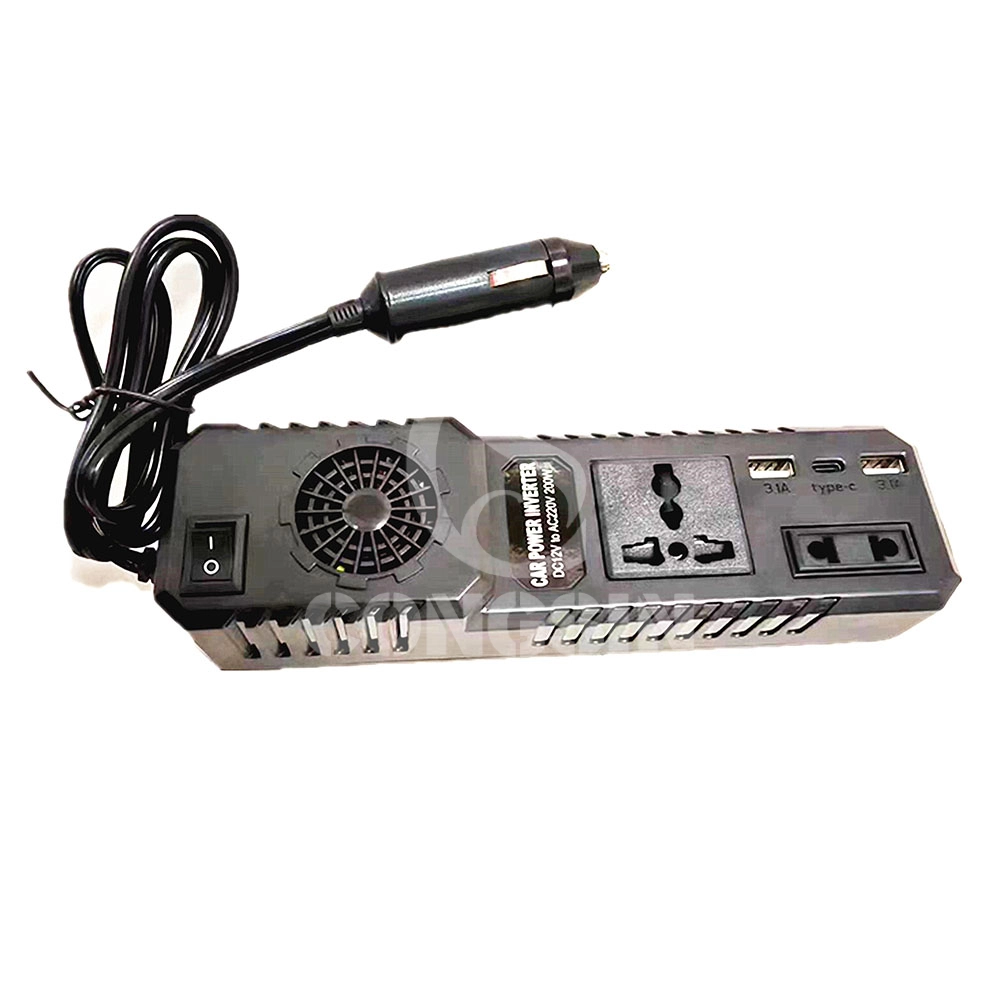
200W Modified Sine Wave Car Power Inverter, Dual Input DC12V/24V to AC220V with Type-C & Dual USB Ports
This 200W Modified Sine Wave Car Power Inverter is a compact and practical power conversion device designed for vehicle use. It supports dual input (DC12V/24V) and outputs AC220V, compatible with various electronic devices. Equipped with a Type-C port and dual 3.1A USB outputs, it can charge laptops, phones, cameras, drones, and other small electronics simultaneously—perfect for outdoor travel, emergency backup, and mobile work scenarios.
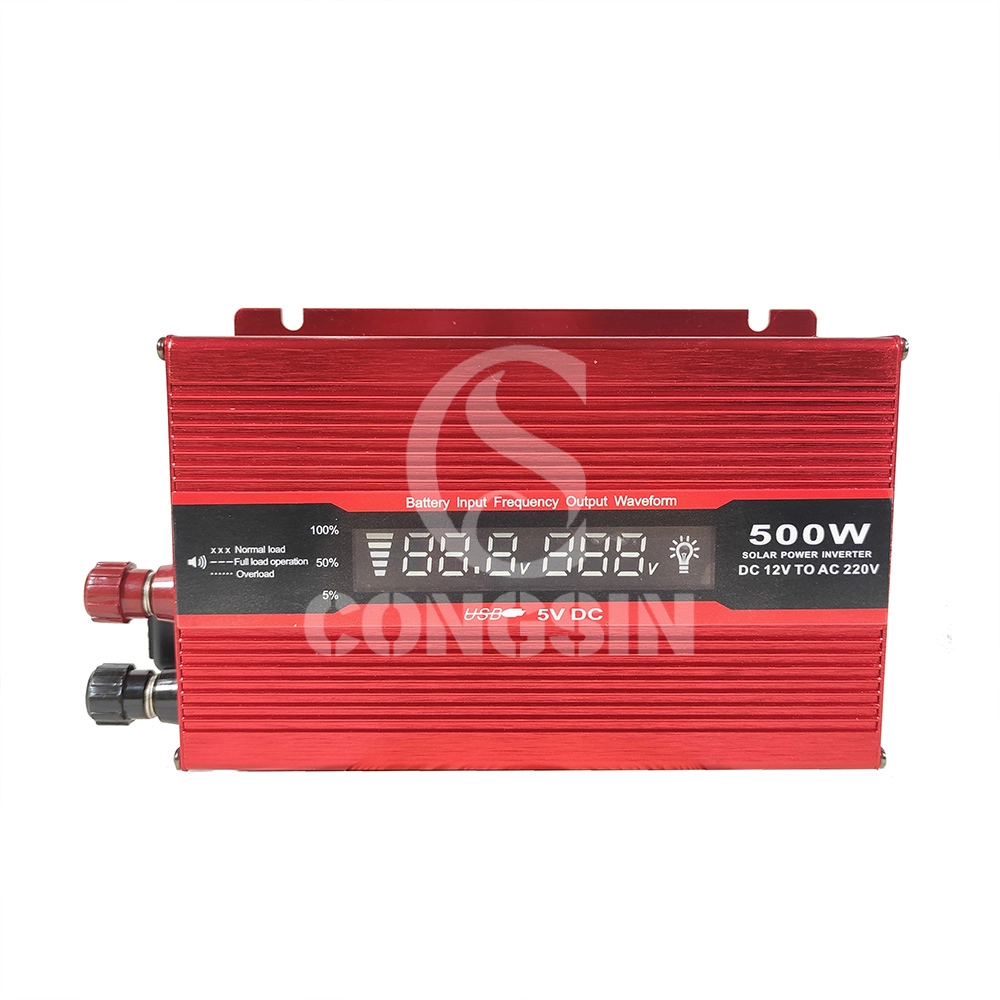
500W Modified Sine Wave Inverter (Rated 360W Peak 720W) DC12V to AC220V Inverter with LED Display Universal Socket
This 500W modified sine wave inverter has a rated power of 360W and a peak power of 720W, with DC12V input and AC220V output. Equipped with 1 USB port, universal socket, LED display, external fuse design, and battery clip, it has an exquisite appearance and stable performance. It can provide reliable AC power conversion for mobile phones, small home appliances, electronic devices, etc. in scenarios such as vehicle, outdoor, and home emergency, meeting the power needs of various devices.
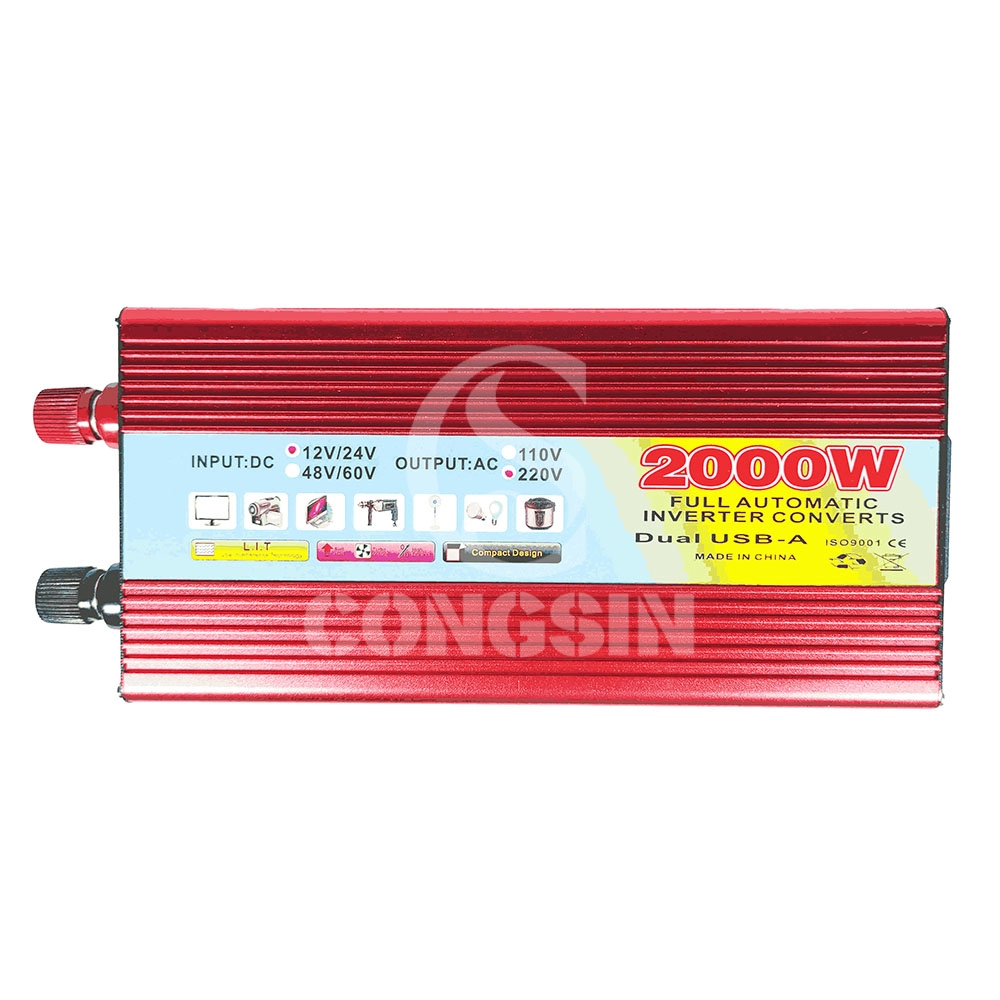
2000W Dual Input Modified Sine Wave Power Inverter (12V/24V or 48V/60V)
This 2000W modified sine wave inverter features a dual-input voltage design (12V/24V or 48V/60V), making it compatible with various DC systems. Compact, efficient, and versatile, it delivers a stable AC 220V output for home, vehicle, and solar power applications.
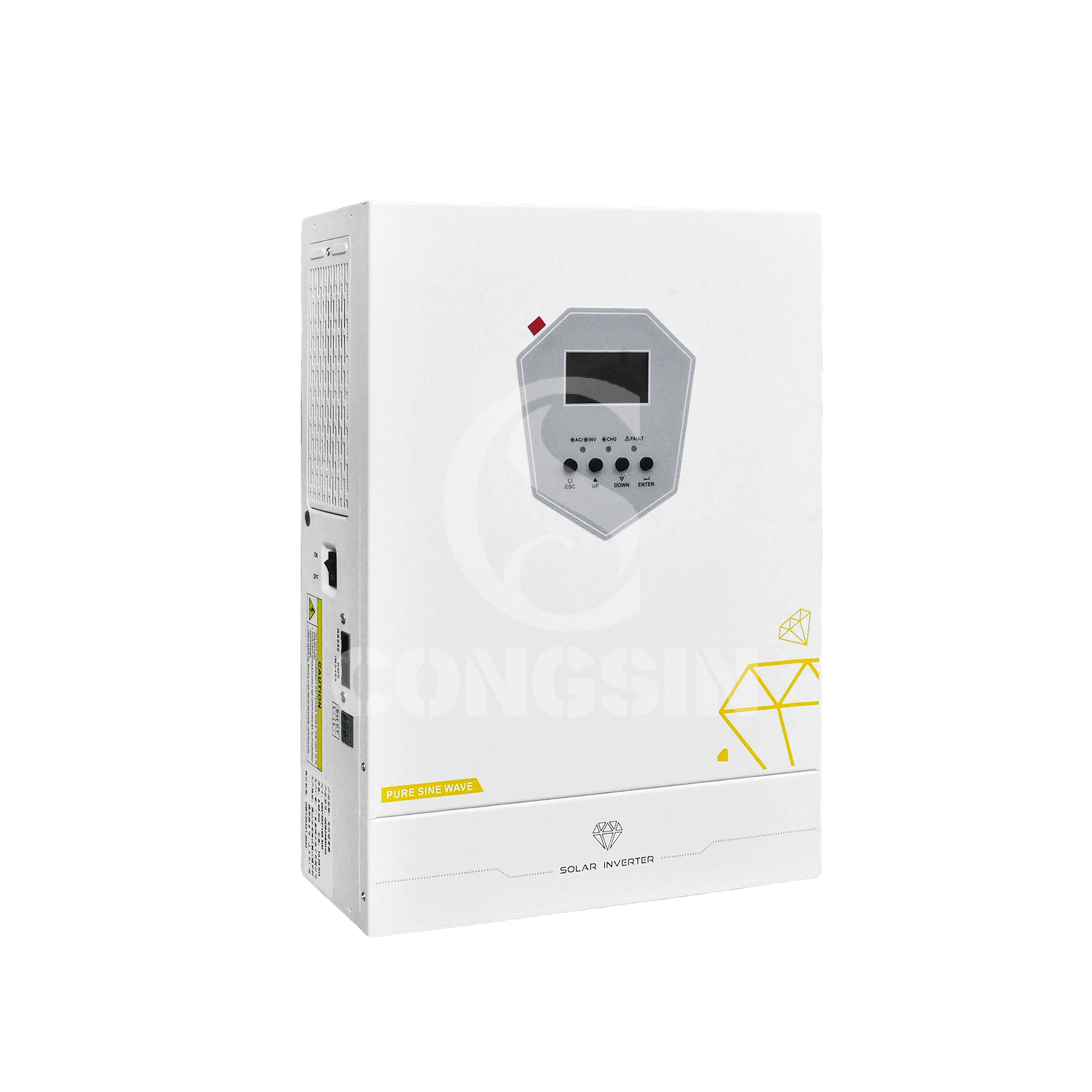
Factory Direct Sales 6000W Hybrid Solar Power Inverter with Controller and LCD Display

CONGSIN is a trusted OEM factory for power inverters, solar charge controllers, and DC converters. Reliable solutions for global B2B buyers.
 High Quality
 7/24 Service
 Guaranteed Warranty
© 2025 Congsin. All Rights Reserved.
 WeChat
 Scan QR Code
sin cong
teaimei10
Whatsapp: +8618028086791
Scan QR Code